
STRUCTURAL CELLULOSE – Group 0,1,2
In architecture, there is an urgent need for research and the use of sustainable materials. Although wood is often seen as a solution, only around 50% of wood is usable after sawing, with further losses occurring during further processing. However, the remaining 50% can be processed into cellulose fibres that bind CO₂ and enable the production of building materials with complex geometries and specific properties through additive manufacturing.
Structural Cellulose uses a biocomposite material based on cellulose fibres and applies this material using a robot-assisted spraying process. Cellulose, a natural polymer derived from plants, is an environmentally friendly material as it is fully biodegradable and compostable. It decomposes naturally without leaving any harmful residues.
The robotic manufacturing process allows for differentiated material application according to specific design specifications, resulting in a reduction of volume and mass.
This term we will be investigating structural cellulose and its application in a series of prototypes.
Group 3,4
The reuse of recycled building materials is increasingly recognised as a sustainable design strategy and is in line with policies such as the European Union’s Waste Framework Directive. Recently, there has been a growing research interest in the fields of architecture, engineering and construction to explore design-to-fabrication methods that utilise the unique geometries and properties of found objects, including construction and manufacturing waste, to create building components, typically walls or domes. An upcycling design strategy based on the principle of ‘form follows availability’ has been proposed, emphasising the flexibility of design outcomes to accommodate and adapt to the irregularities of the recycled material. In this course, we will go through the workflow from design to fabrication in upcycling design through scanning, sorting, assembling and assembling.
ARCHCOMPLETE – DESIGN GENERATION FROM 3D MODELS – Group 5,6,7,8
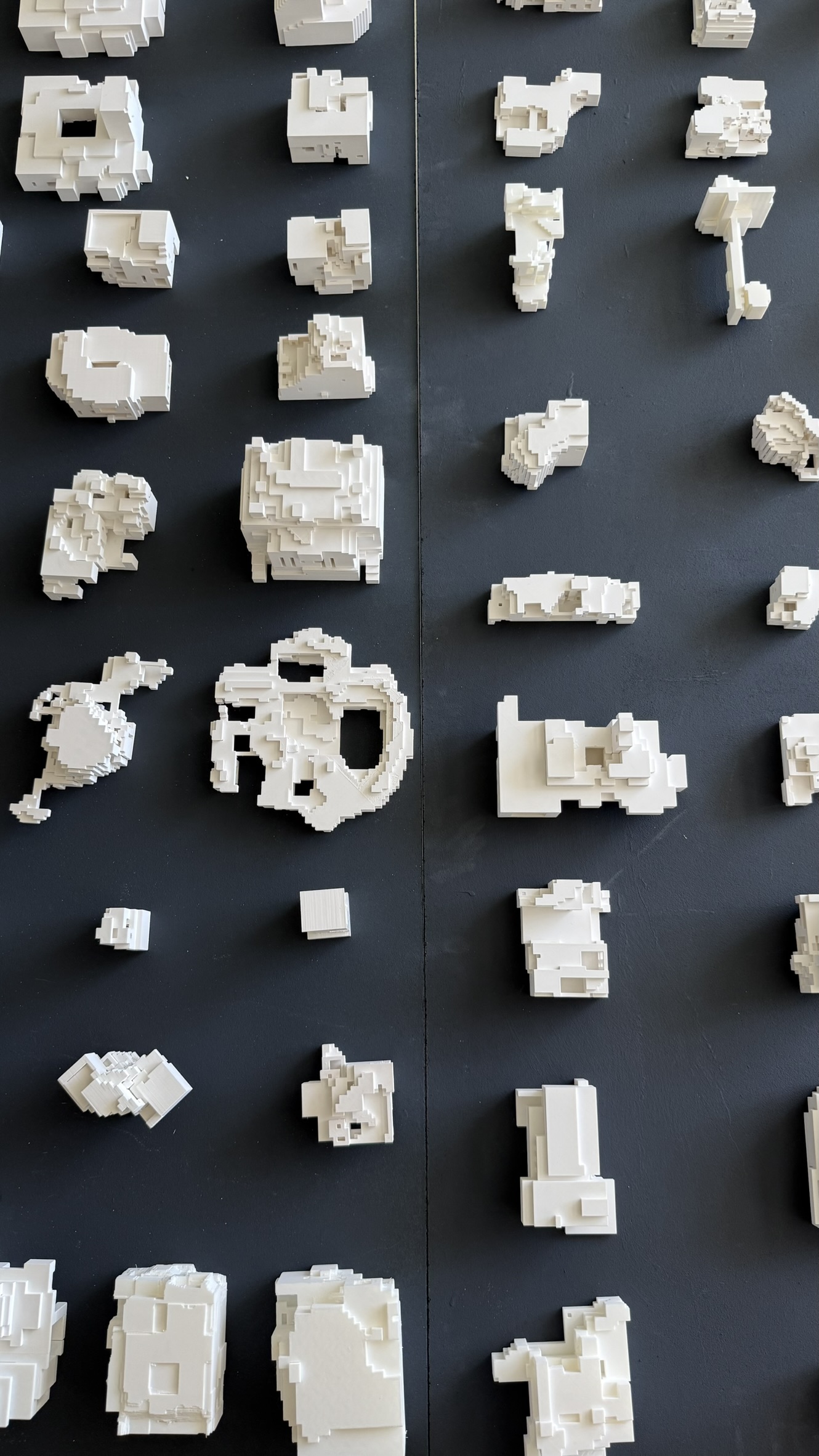
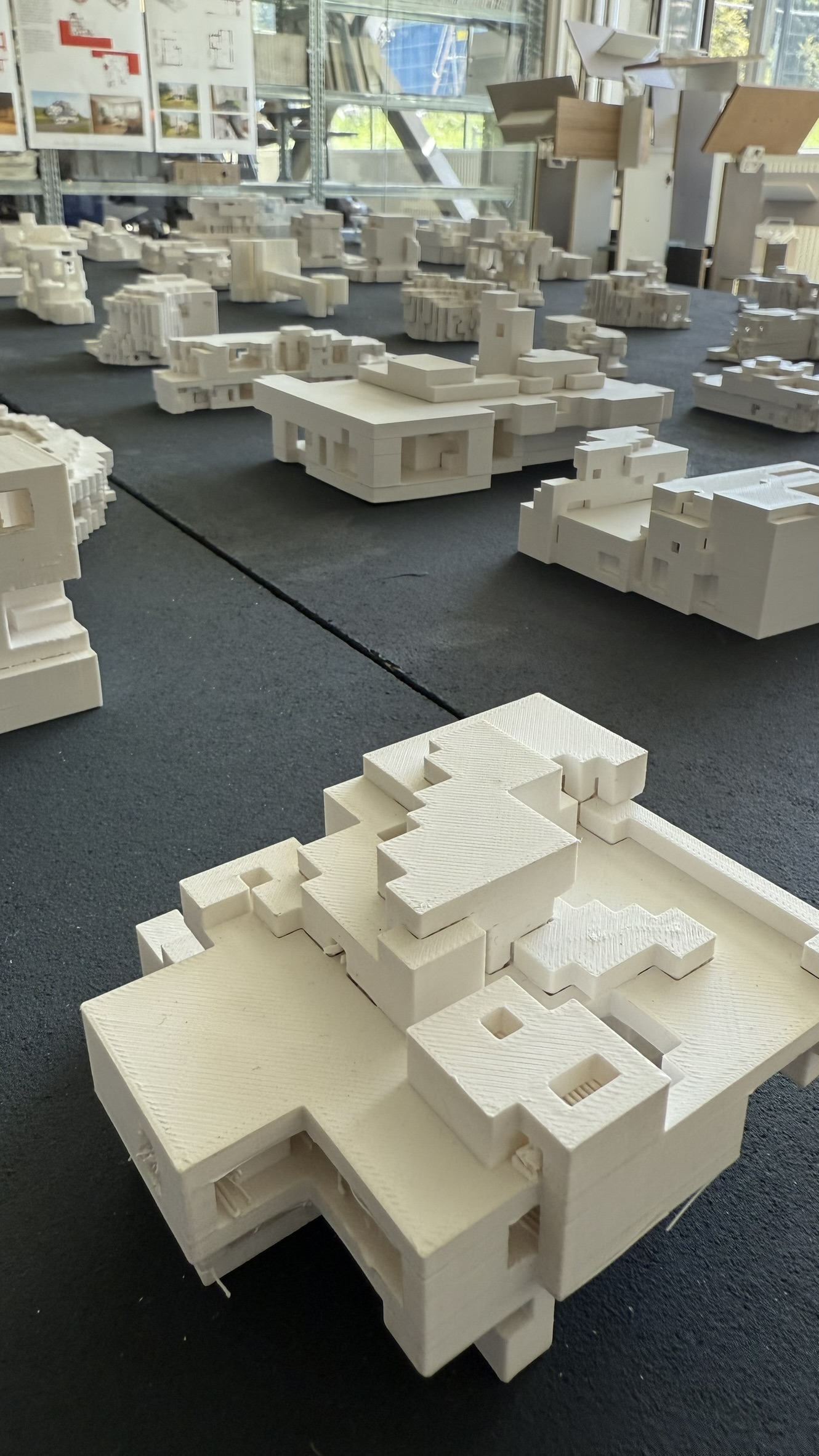
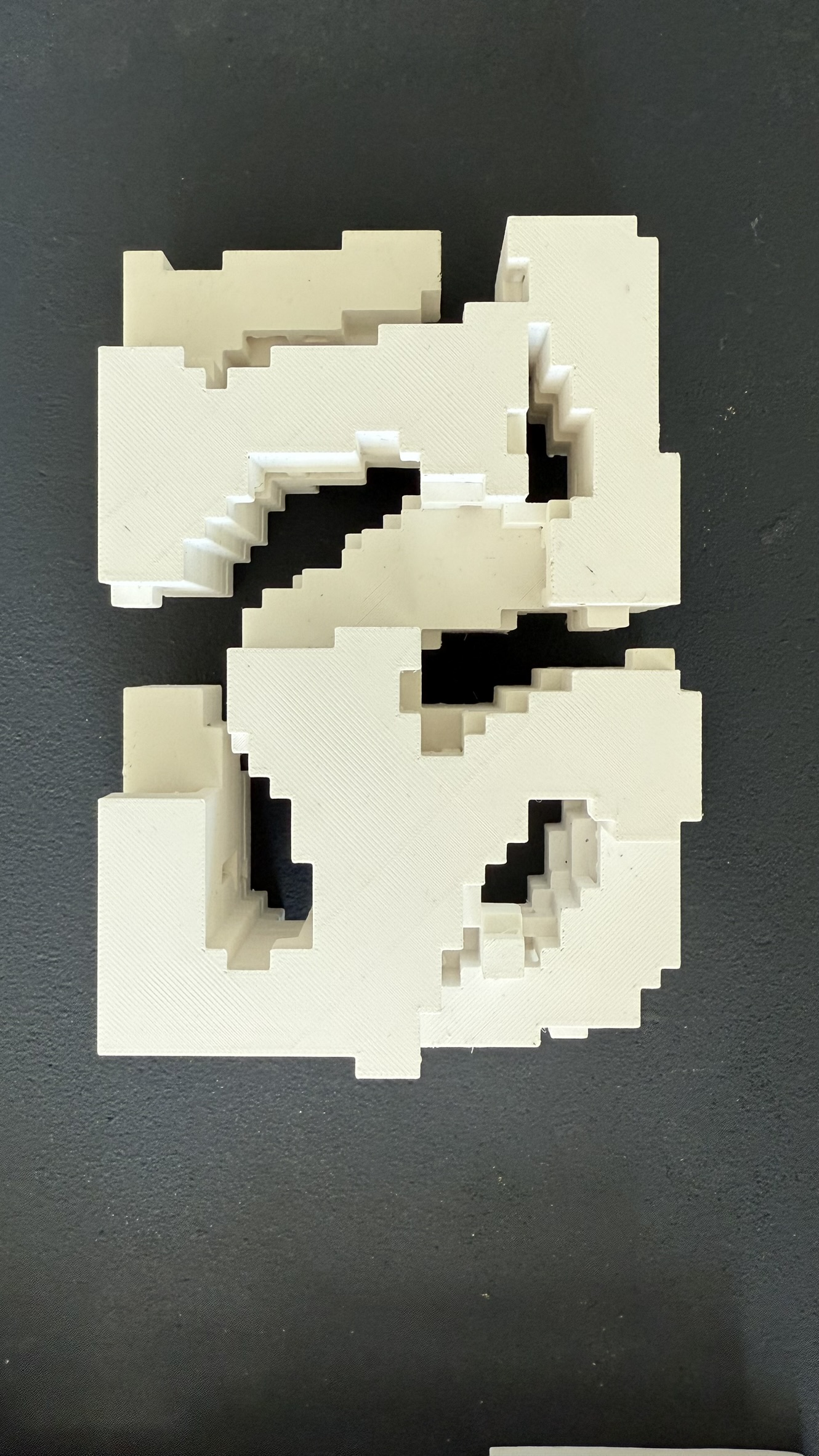
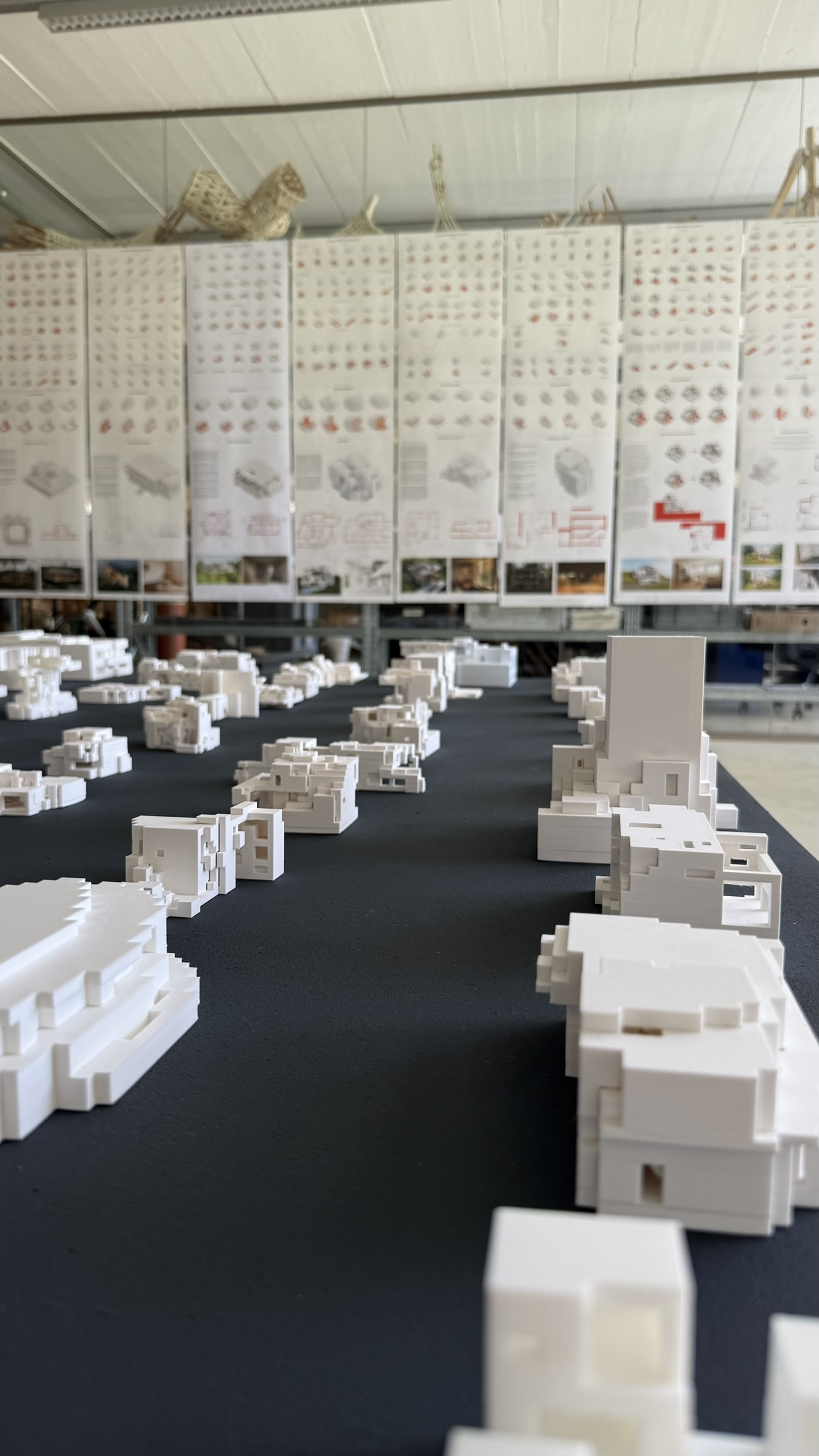
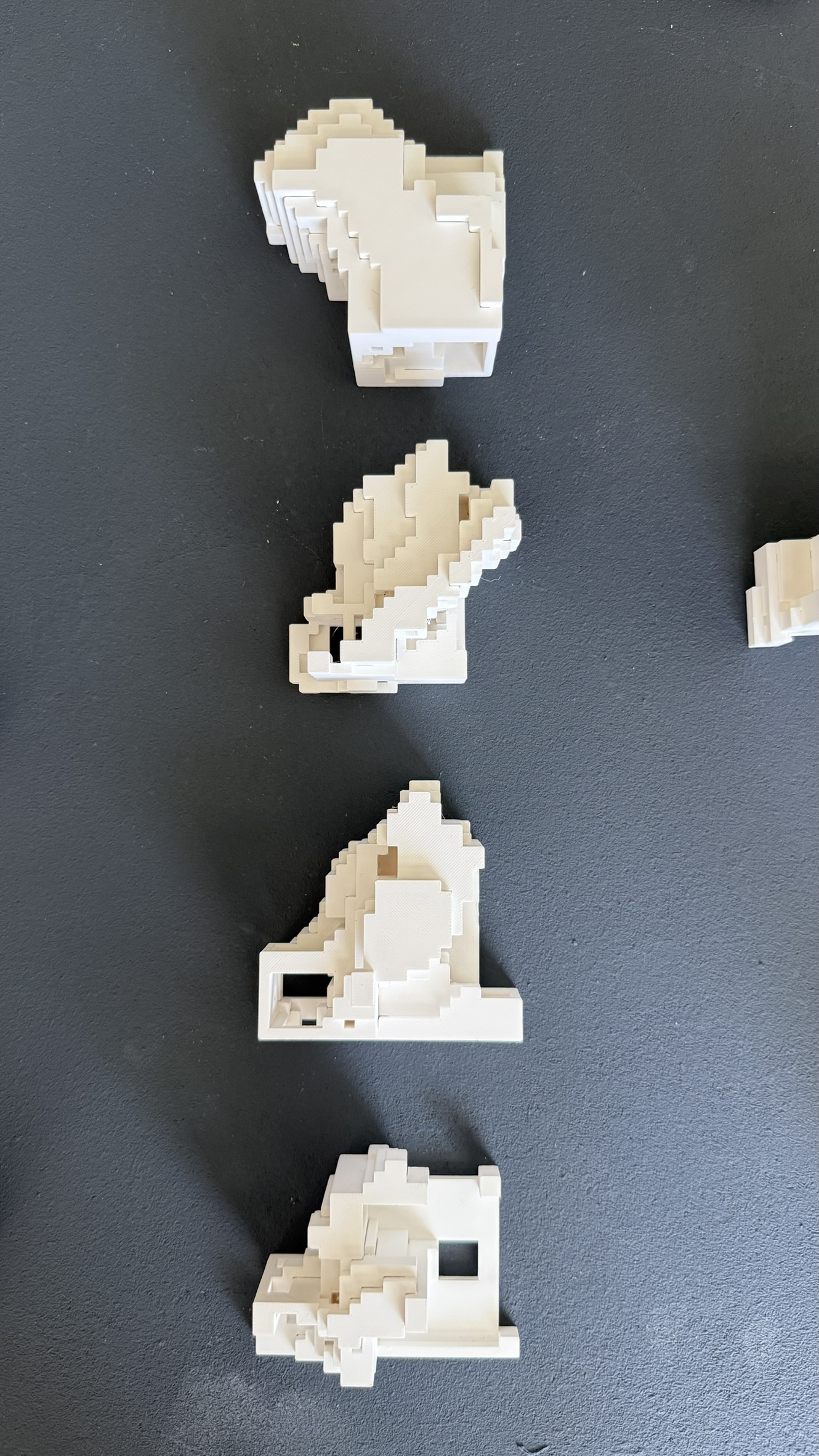
The seminar aims to provide an in-depth insight into the application of machine learning in concept modelling for architecture. Today, AI tools are increasingly used as inspiration for design generation. While the best-known applications such as Midjourney, Dalle-2 and Stable Diffusion work exclusively with images, the seminar will use detailed 3D models as a starting point. During the seminar, you will have the opportunity to train, experiment and test an autocomplete function for design generation (shape completion) and then jointly produce and assemble a part of an AI-generated architectural model.
FORCEFLOW – Group 9,10,11
This course focuses on the optimisation of structures and explores how digital tools and fabrication techniques improve material efficiency and sustainability. Students will experiment with walls and openings using computer-aided design and digital simulation tools such as Grasshopper and Karamba3D to develop lightweight, high-performance structures. We will explore methods of adding, reducing and optimising geometries through various digital techniques and algorithmic processes. These concepts will be brought to life through the construction of models and potentially 1:1 scale investigations, with a focus on 3D printing.